
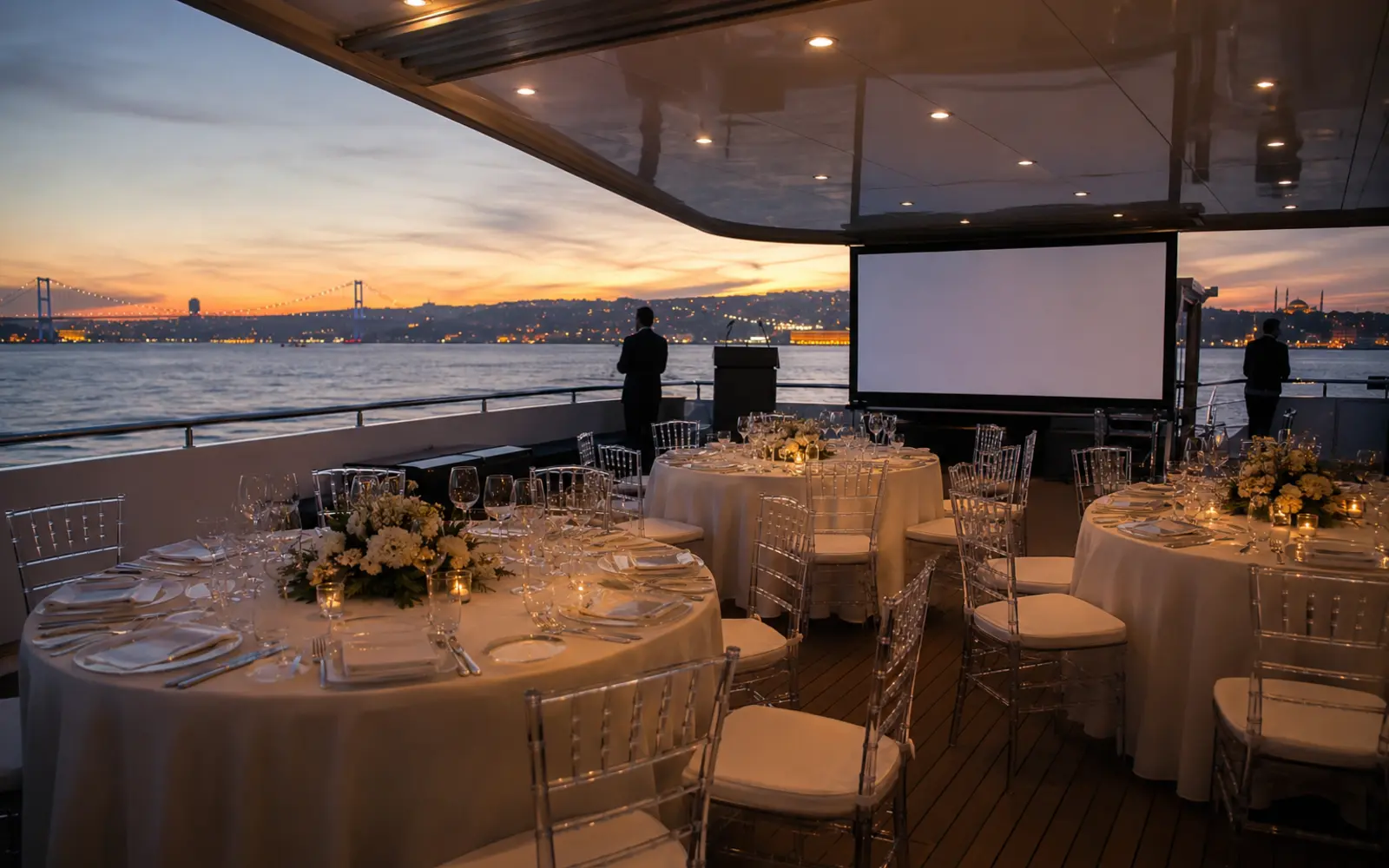
Plan the right yacht, Bosphorus route, menu, technical setup and transport for a company dinner, product launch or team event.
Define the business objective and success criteria first
Start a corporate yacht event by defining its business purpose, not by browsing boats. A client dinner and a product launch do not require the same seating, duration or technical setup. A team celebration may prioritise circulation, music and informal food, while an executive meeting needs a quiet area, punctual service and a clear presentation layout. Turn the guest profile, event language, dress approach and level of formality into a short brief. List arrival, speeches, dining, photography and return times in that document. You can then compare proposals by how well they support the programme rather than by vessel size alone. Aden Yachting’s Business Dinner & Product Launch service page can help identify the available components, but the final scope should follow your objectives and confirmed guest list.
Choose the yacht for the layout, not only the headcount
Guest count is the starting point for yacht selection, not the only criterion. The same group needs different space for a standing reception and a seated dinner. If speeches are planned, guests should be able to face the speaker comfortably, service routes must remain open and sound should reach the audience evenly. Review the saloon, open deck, toilet access, boarding steps and the area available to shelter everyone if conditions change, using current photographs or video. Include photographers, musicians, technicians and service staff in the total onboard plan. Ask for the passenger capacity shown in the vessel’s applicable documents and written confirmation that the proposed event layout is suitable. A yacht that looks large does not automatically provide the right stage, tables or service flow; usable space must fit the programme.
Design the duration, Bosphorus route and speaking moments together
For a corporate event, the route is more than scenery; it is part of the timetable. Bridges, palaces and waterfront mansions create a memorable Bosphorus setting, but wind, waves, engine noise and marine traffic matter during speeches or product demonstrations. Allow guests to board and settle before scheduling the most important presentation. If sunset is central to the plan, set departure according to the season and leave time for the return and pier operation. Separate cruising, dining and informal conversation when planning a longer meeting. The Bosphorus, sunset and historic-landmark route pages provide useful ideas, although the final course and timing must follow the captain’s assessment of weather, current and operating conditions on the day.
Match the menu to service rhythm and guest needs
For a corporate menu, consider ease of service and compatibility with the programme before choosing the most elaborate option. A cocktail format may suit a short launch where guests circulate, while a seated dinner can support calmer conversation during a longer client meeting. Keep meal service away from speeches and ask about galley capacity so hot dishes are not left waiting. Collect vegetarian, vegan, allergy-related and religious dietary requirements before the final day. The written quotation should clarify alcoholic and non-alcoholic drinks, portions, service staff and any products that may be brought from outside. Discuss how a cake, branded biscuits or a special presentation will be stored and served. A successful menu is not just a collection of attractive dishes; it arrives at the right time and temperature without interrupting the event.
Test branding, sound and presentation requirements in advance
Welcome signs, place cards, product displays, flags and screen graphics can reinforce the brand, but they must not obstruct passageways or sightlines. Share dimensions, fixing methods and installation timing with the operations team. Choose vessel-appropriate solutions instead of strong adhesives, open flames, flammable materials or lightweight décor that could fall into the water. Do not rely on a list of microphones, speakers, screens and cables; where possible, test the actual device and file format before the event. Mobile internet may vary during the cruise, so keep an offline presentation and download important videos locally. Give the photography team a shot list, speech times and image-permission requirements. Confirm installation, rehearsal and removal time separately from the charter duration.
Complete transport, weather alternatives and the written duty plan
The guest experience begins before boarding. Send the pier address, host contact, vehicle-drop information and recommended arrival time in one clear message. If guests connect from an airport, hotel or restaurant, coordinate a VIP road transfer; for suitable waterfront points, a private speedboat transfer may complement the main programme. Allow realistic buffers for traffic, pier access and luggage. Before the event, document the indoor layout, alternative time, route adjustment and postponement approach for rain, wind or operational changes. The final confirmation should state the yacht, date, times, guest count, menu, technical equipment, branding, payment scope and cancellation terms. Name one decision-maker for the company, organiser and guest group. A minute-by-minute schedule and contact list keep decisions coordinated on the day.