
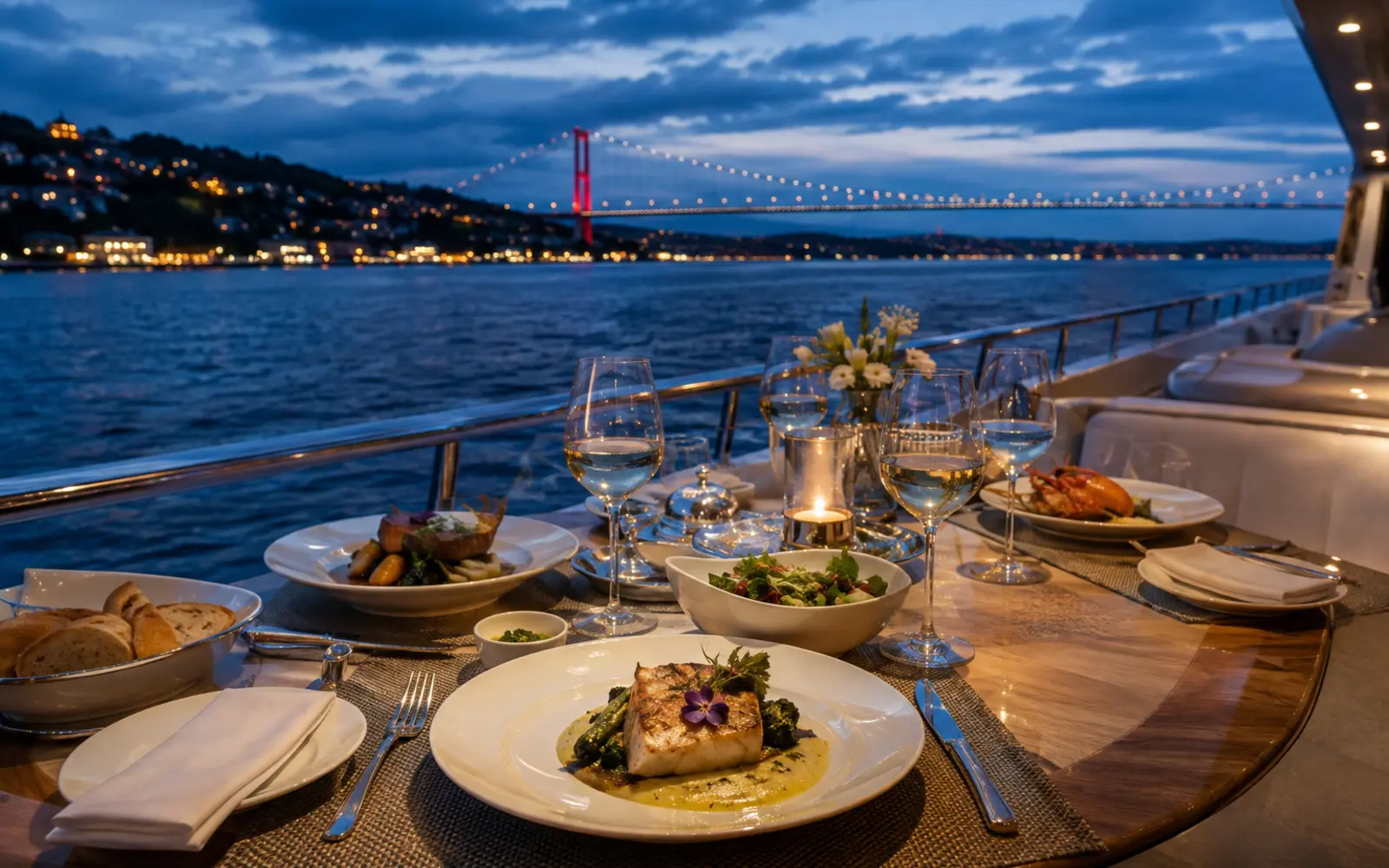
Plan a yacht dinner menu around service time, galley capability, guest needs and the rhythm of a Bosphorus cruise.
Design the evening before choosing the dishes
The first decision in planning dinner on a yacht is not the main course; it is how the evening should unfold. Boarding, welcome drinks, time for the view, dinner service, a celebration and the return all share the same programme. On a two-hour Bosphorus cruise, a long multi-course meal can make it difficult for guests to enjoy the shoreline and talk comfortably. A longer charter creates natural gaps between starter, main course and dessert. Consider the cruise duration, departure time and the view you want when service begins as one decision. Near sunset, the welcome course may work on the open deck before the main meal moves indoors as the air cools. When reviewing the Dinner on a Yacht service, look beyond dish names to the service style and time allocated to it. A successful menu does not interrupt the cruise; it moves with it.
Match the menu to the galley and service layout
A restaurant menu cannot always be transferred unchanged to a yacht. Some vessels have a full galley, while others provide a more limited area for holding prepared food at the right temperature and plating it. Stairs, narrow passages and vessel movement also affect service speed. Prioritise dishes that can be presented consistently on board rather than items requiring delicate last-minute cooking, large equipment or immediate serving. Ask where hot food will be prepared, when it will arrive, how many service staff are planned and how used plates will move away from the guest area. Check the table arrangement as well as passenger capacity: a licensed capacity does not mean every guest can dine at one table. The written quote should say whether galley use, service staff, crockery, cutlery and table linen are included. Clarifying these practical details prevents an elegant menu on paper from becoming awkward on board.
Build a balanced menu for the guest profile
A dinner menu should first be comfortable for the group to enjoy, not merely look elaborate. Familiar choices that cover different ages and preferences often suit a corporate gathering, while a romantic dinner may be stronger with fewer, more carefully presented plates. Shareable cold starters reduce pressure on the service team. For a larger party, one main option plus a pre-declared alternative is easier to coordinate than collecting decisions at the table. Dessert should not compete with a celebration cake. If a birthday or anniversary cake is planned, fruit or another lighter finish may be enough. Oversized portions are not automatically generous on a moving vessel; moderate plates are easier to serve and enjoy. Adding more menu items does not by itself improve quality. A coherent starter, main and finish keeps the table ordered and gives guests time to look up from the meal and appreciate the Bosphorus.
Collect allergies and dietary needs in writing
When confirming guest numbers, also collect allergies and dietary requirements. A vegetarian or vegan preference, gluten or lactose sensitivity and a serious food allergy are different matters and should be communicated separately and clearly to the kitchen. For a serious allergy, the risk of cross-contact in the preparation area can be as important as the ingredient list. Do not assume the supplier can accommodate it; obtain written confirmation before booking. A simple service plan can identify which guest receives an alternative plate without sharing sensitive health information more widely than necessary. Simpler portions for children, easy-to-eat choices for older guests and a considered range of non-alcoholic drinks can also make service smoother. Last-day changes may not be possible because ingredients and preparation have already been arranged, so closing the dietary list several days before the event is a practical step.
Coordinate route, weather and table placement
Dinner service is not separate from the route. In sections where wind or wake is more noticeable, carrying hot plates, keeping glasses stable and making guests comfortable at the table can be harder. Allow the captain to adjust the cruising plan according to current traffic and marine conditions. On a Dining Bosphorus Cruise, service can be placed in a calmer part of the itinerary, with a brief pause during a bridge passage or a particularly strong photo view. An open deck is memorable in settled weather, but a suitable indoor alternative matters when Istanbul's breeze changes. Table décor should not block the view and must remain stable while underway. Candles, open flames and powered décor are subject to the yacht operator's rules and should never be assumed. When the itinerary, seating and service team follow one timeline, dinner feels like a natural part of the cruise rather than a separate activity squeezed into it.
Confirm the complete scope in writing
Before booking, place the guest count, every menu item, portion format, beverage scope, service staff, table setup and any cake service in one written list. If guests will bring food or drink, confirm delivery time, storage, service charges and the yacht's acceptance rules. Compare more than a per-person figure: check whether yacht time, fuel, crew, tableware and extras are included. Ask when the final number must be submitted and how later increases or reductions are handled. The confirmation should also address a weather-related move between decks, the effect of guest delay on cruise time and cancellation terms for personalised supplier orders. Nominate one guest-side contact for the event so that the galley, service and yacht teams do not receive conflicting instructions. A clear final confirmation is the most useful preparation for a calm, well-paced dinner.