
Plan an Istanbul winter yacht charter with the right vessel, enclosed salon, Bosphorus route, practical menu, clothing and weather backup.
Choosing a yacht for a winter yacht charter in Istanbul
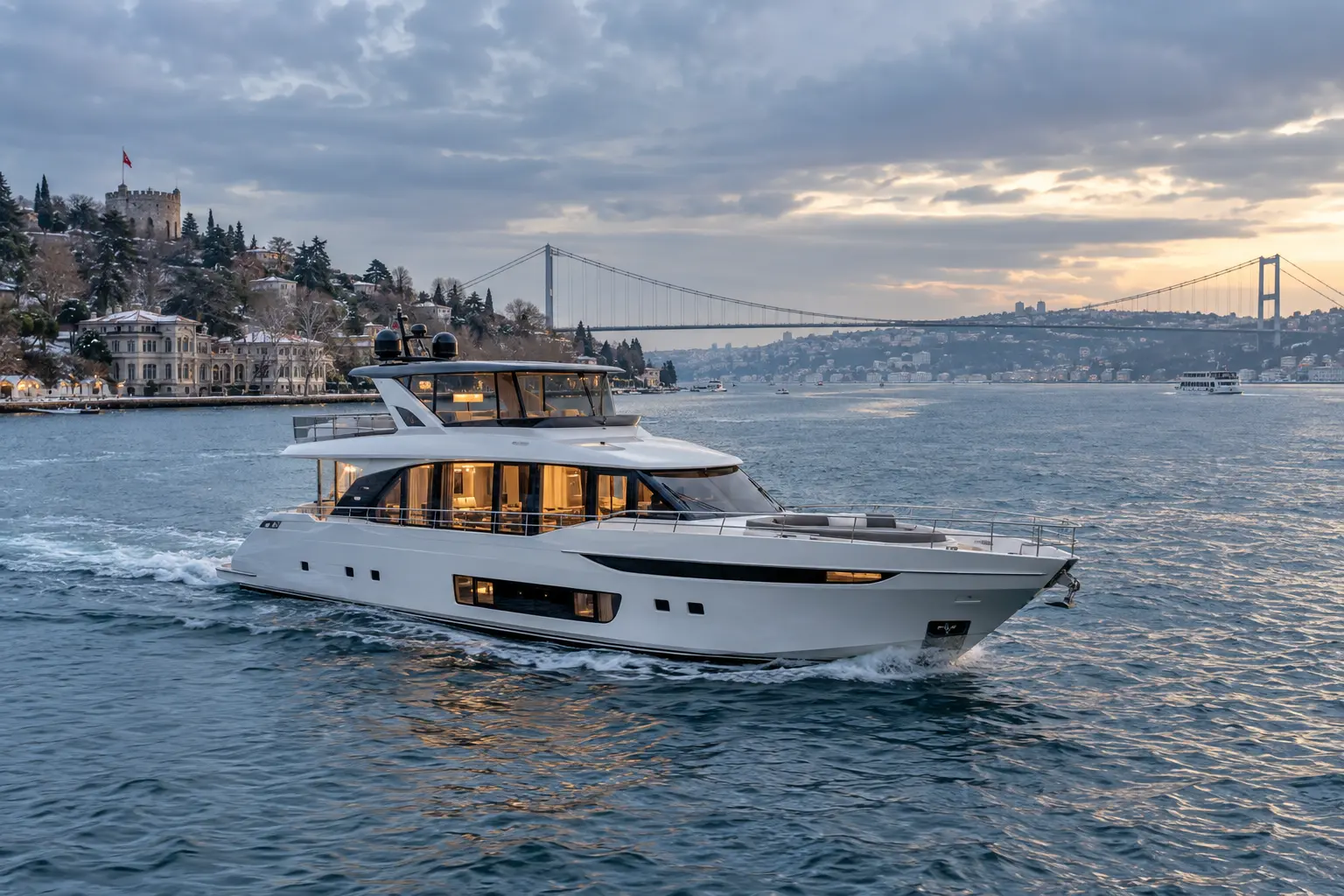
A winter yacht charter in Istanbul does not mean giving up the open deck; it means choosing a vessel that can still support the programme when conditions change. The first question is not simply how the yacht looks from outside, but whether the enclosed salon can genuinely seat the whole group. Large windows, balanced seating, working heating and easy access to the deck make it possible to enjoy the Bosphorus from indoors during colder periods. Assess comfort by how many guests can sit inside at once, not only by the licensed maximum capacity. When reviewing photographs, look beyond summer deck shots and inspect the salon, entrance steps, toilet and enclosed service area. When comparing Istanbul yacht charter options, share the date, time, number of adults and children, and planned catering together so the vessel can be matched to the actual winter programme. Ask whether the salon can be warmed before guests arrive and how the heating will be used during the cruise. Photographs show volume, while a recent short video may give a clearer view of table layout, windows and circulation space.
Plan the duration and route around daylight
Winter daylight is shorter than in summer, so the starting time changes the character of the cruise. Guests who want architectural detail and photographs can place most of the itinerary in daylight. If city lights and dinner are the priority, a programme that moves from late afternoon into evening may be more suitable. On a two-hour cruise, it is often better to focus on one coherent stretch—such as Dolmabahçe, Beşiktaş and Ortaköy, or Ortaköy, Bebek and Rumeli Fortress—than to chase many distant points. A longer route does not automatically create a better experience; the boarding pier, return time and meal service all use part of the schedule. The Istanbul Bosphorus yacht route page can help identify priority views. Mention any important photography, dinner or celebration moment in the reservation request so the route can be planned around it. If returning to the same pier is not essential, ask whether a different drop-off point could simplify the programme; any extra operating time or conditions should be stated clearly in the quote.
Balance the enclosed salon and open deck
A winter cruise should not be designed entirely around the salon, but it should not depend solely on the open deck either. On a well-matched yacht, guests can step outside briefly for scenery and photographs, then return to a warm, organised interior. Window visibility, seating direction, ventilation and service passages are as important as heating. For larger groups, ask where coats, bags and photography equipment will be placed; usable salon capacity is more than a seat count. If the deck will be used, follow crew guidance about wind-exposed areas and surfaces that may become slippery. For children or older guests, reviewing the boarding steps and the transition between the salon and deck before booking is helpful. The goal is a flexible layout that allows people to move comfortably as the weather changes.
Keep the winter menu practical for onboard service
Warm drinks, soup or a hot main course may suit cold weather, but the menu must reflect the yacht’s galley and service capabilities rather than season alone. Full cooking may not be possible on every vessel; some dishes may be prepared ashore and served onboard. Ask in writing where food is prepared, which items will be served hot, whether service staff are included and what the drinks package covers. A balanced menu with fewer, well-timed courses often works better with the route than many separate plates and keeps guests connected to the view. Share allergies, vegetarian requirements, children’s portions and celebration cakes when booking, not on the final day. For dinner, consider table layout, circulation space and enclosed salon capacity together with the choice of yacht. Small details, including how often tea and coffee are refreshed, can make a noticeable difference on a cold day.
Organise boarding, clothing and guest communication
Waiting at a pier in winter can be less comfortable than the cruise itself. Send guests one clear message with the map pin, meeting time, contact person and instructions for identifying the yacht. If simultaneous arrival seems difficult, appoint one group coordinator and provide a reasonable early-arrival window. For clothing, practical guidance is to use layers, add a wind-resistant outer layer and choose flat shoes with good grip. Report large suitcases, pushchairs, decorations or technical equipment in advance because winter coats can increase storage needs. Decide who will notify the group by WhatsApp, phone or email if the boarding point changes. Including the hotel district and transport method in the reservation request makes it easier to prepare a realistic primary and alternative pier.
Do not make the weather decision from one icon
A rain symbol does not automatically mean that a cruise will be cancelled, and the absence of rain does not guarantee that every marine condition is suitable. Istanbul’s hourly forecast helps with land temperature, precipitation and wind, while the Marmara marine forecast covers subjects such as wind, waves and visibility. Long-term climate statistics are useful for understanding the general season, but the current forecast and the captain’s assessment determine the operational decision for a specific day. Before booking, obtain the operator’s cancellation and change terms in writing and ask how route, time or pier updates will be communicated. Check the forecast again the day before, wait for the final confirmation close to departure and send guests information through one channel. A reliable winter plan depends on a clear alternative, not on promises that conditions cannot change.
Sources and further reading
- Istanbul hourly and five-day weather forecastMeteoroloji Genel Müdürlüğü
- Three-day marine forecast for the MarmaraMeteoroloji Genel Müdürlüğü
- Official climate statistics for IstanbulMeteoroloji Genel Müdürlüğü
- AKOM Istanbul weather informationİstanbul Büyükşehir Belediyesi AKOM