
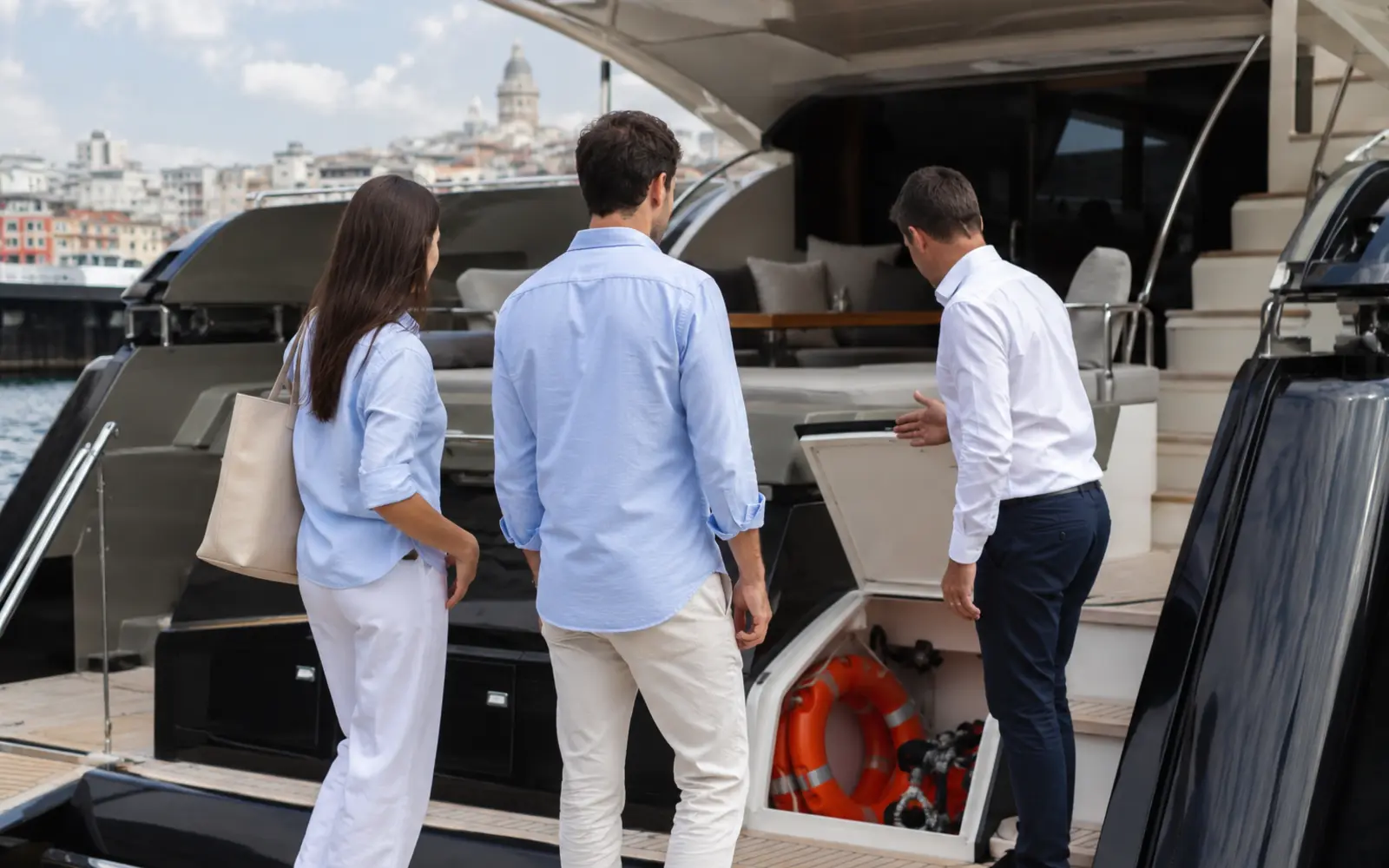
Learn what to ask about capacity, crew, safety equipment, weather planning and written confirmation when chartering a yacht in Istanbul.
Does the yacht's capacity suit your event layout?
The first safety question when chartering a yacht should be more specific than “How many people does it hold?” Ask for the passenger capacity stated in the vessel's applicable documents and compare it with your guest list. Then consider the real layout. Dining tables, music space, décor, service routes and movement between indoor and outdoor areas all reduce usable space. A number that works for ordinary cruising may not provide the same comfort when every guest needs a dining seat. Report adults and children separately, and confirm whether photographers, musicians and other service personnel count within the total onboard plan. If the guest list grows, update the number in writing rather than arriving with unannounced passengers. Choosing the right yacht is not about selecting the model that looks largest in photographs; it is about matching authorised capacity, circulation and service arrangements to the way the group will actually use the vessel.
How are the captain, crew and boarding briefing organised?
During booking, ask who will operate the yacht, which crew members will be on duty and who will assist guests. Before departure, the group should receive short, understandable directions on boarding and disembarking, moving safely on board, supervising children, restricted areas and what to do if the crew gives an emergency instruction. For a larger party, one guest representative can help the captain or event coordinator pass information consistently. If guests speak different languages, discuss how the essential briefing will be understood. Practical issues such as high heels, wet surfaces, steep steps and use of the open deck deserve attention according to the event. Crew numbers and roles may vary with the vessel, guest count, dining service and event scope. Do not assume that an event package automatically includes a particular staffing arrangement; ask for the operational team and service responsibilities to appear clearly in the quotation and confirmation.
What should you ask about lifesaving and emergency equipment?
Ask what lifesaving equipment is carried and how its suitability for the booked passenger group is checked. When children are joining, provide their ages and approximate weights in advance and confirm the availability of appropriately sized lifejackets. It is reasonable to ask for simple information about first-aid supplies, fire-response equipment, communication and emergency-exit arrangements. Guests should follow crew instructions rather than trying to operate unfamiliar equipment themselves. The value of safety equipment is not limited to appearing on a list; it needs to be accessible and supported by a clear crew response plan. Yacht photographs help with style and space but do not demonstrate the whole safety setup. Confirm the current details of the actual vessel and ask how you will be informed if an operational replacement is required. If an answer about documents or equipment remains vague, request clarification in writing before making payment.
Who makes the weather and route decision?
Weather, current, visibility and marine traffic can change an Istanbul cruise plan. Instead of relying only on a general forecast, ask who assesses the conditions on the day and which alternatives are considered if departure is not regarded as safe. The final operational decision should follow the current assessment of the captain, yacht operator and competent authorities where relevant. Rain alone does not always cancel a cruise; a yacht with adequate indoor space, a different start time or a more sheltered route may be possible. On the other hand, promising one viewpoint, a swimming stop or an exact arrival minute regardless of conditions is unrealistic. Use the Bosphorus and Princes' Islands route pages as planning guides, not unchangeable commitments. Written terms for postponement, date changes and altered service scope reduce confusion when the forecast changes close to departure.
What should be prepared for children and guests needing mobility support?
If the group includes children, older guests, a pregnant passenger or someone with limited mobility, do not choose a yacht from general photographs alone. The gap between pier and vessel, boarding height, number of steps, handrails, toilet access and sheltered seating should be reviewed for that guest. When a wheelchair or walking aid is used, share dimensions and assistance needs before booking because vessels do not offer identical access. Parents or designated carers remain responsible for supervising young children, who should not be left alone on deck. Pushchairs, non-medical support equipment and substantial luggage can narrow passageways, so report them as part of the plan. Guests prone to seasickness can discuss appropriate personal preparation with a health professional. The earlier the operations team understands the group's actual needs, the more realistically it can propose a suitable yacht, boarding point and seating arrangement.
Which safety details belong in the written confirmation?
The final step is to collect the agreed details in one written confirmation. It should state the date, boarding time and point, actual yacht, permitted guest count, duration, main route, dining and extra services. Ask how and when the customer will be informed if an operational yacht change becomes necessary, and how the replacement's capacity and service scope will be compared. Route adjustments for weather or operations, the effect of guest delay, conditions for swimming stops and the cancellation or postponement approach should be recorded. Naming one contact for Aden Yachting, the yacht operator and the guest group keeps communication clear on the day. If an emergency contact for a guest is requested, ask who will use it, for what purpose and how long it will be retained. Safety is not a single badge or broad promise; it comes from the correct vessel, accurate information and a consistent operating plan working together.